
Mold Removal in Mandeville That Takes Out the Wrong-Side Barrier
A removal that takes out the growth and the layer that caused it, and rebuilds the wall so it can dry toward the room.
Mold Removal quote in Mandeville
Tell us what you can see or smell, roughly where in the house it is, and whether the house is raised or on a slab. Those three things narrow it more than the size of the patch does, because they point at how the water is arriving rather than where it ended up.
Would you rather talk it through? Call (315) 640-3590.
$100 off your first job
Credited by us on your first booked job.
- One credit per customer per property, on your first booked job.
- Valid through December 31, 2026.
Mention this offer when you book. Full terms.
Mandeville city, St. Tammany Parish and the rebuild
Find out which office governs the address. The city of Mandeville issues its own permits and holds Community Rating System Class 5 on a current map dated May 16, 2012, while an address just outside the city limit falls to St. Tammany Parish at Class 7 on a map last revised in 1999. Then check the scale against Louisiana's $7,500 line: above it, a licensed remediator who owes you a written report, and a different firm from whoever surveyed the house. Below it, ask for the rebuild specification in writing, because it is the part that stops a repeat.
What goes back in the wall
Insulation without a room-side vapor retarder and a permeable finish. Ask for the specification in the scope.
City of Mandeville or the parish
Inside the limit, the city permits the work. Just outside, St. Tammany Parish does. Confirm which before the scope is priced.
Whether the indoor humidity is under control
The EPA asks for indoor humidity between 30 and 60 percent. A rebuilt wall in a room held above that is still at risk.
What LSU and the city rating say about Mandeville walls

The city of Mandeville, community 220202, holds Community Rating System Class 5, a 25 percent discount in the special flood hazard area and 10 percent outside it, the deepest discount on the North Shore. Its current effective flood insurance rate map dates from May 16, 2012, the most recent in St. Tammany Parish.
Source: Federal Emergency Management Agency, National Flood Insurance Program Community Status Book, accessed 2026-09-22
St. Tammany Parish, community 225205, holds Community Rating System Class 7, a 15 percent discount in the special flood hazard area and 5 percent outside it, and its current effective flood insurance rate map dates from April 21, 1999, the oldest current map in this service area. The three cities inside it hold their own separate classes.
Source: Federal Emergency Management Agency, National Flood Insurance Program Community Status Book, accessed 2026-09-22
The LSU AgCenter states that in a hot-humid climate moisture flows from outside to inside most of the year, and that the ideal assembly of a frame wall keeps the interior side fully permeable and locates both an air barrier and water vapor retarder or barrier to the exterior side to minimize the entry of outside water vapor.
Source: LSU AgCenter, Bill Robinson and Claudette H. Reichel, Ideal Wall Assemblies for Hot-humid and Mixed-humid Climates, accessed 2026-09-22
The LSU AgCenter states that having no vapor barrier on the interior side is more important than having a vapor retarder on the outside, and that none is preferable to one on the wrong side.
Source: LSU AgCenter, Bill Robinson and Claudette H. Reichel, Ideal Wall Assemblies for Hot-humid and Mixed-humid Climates, accessed 2026-09-22
Mandeville has 6,003 housing units with a median year built of 1990 and only 26.1 percent of the stock predates 1980, the newest housing in this service area after Covington. 1,228 units were built in the 1990s and 1,076 between 2000 and 2009.
Source: United States Census Bureau, American Community Survey 2020-2024 five year estimates, accessed 2026-09-22
What mold removal involves in Mandeville
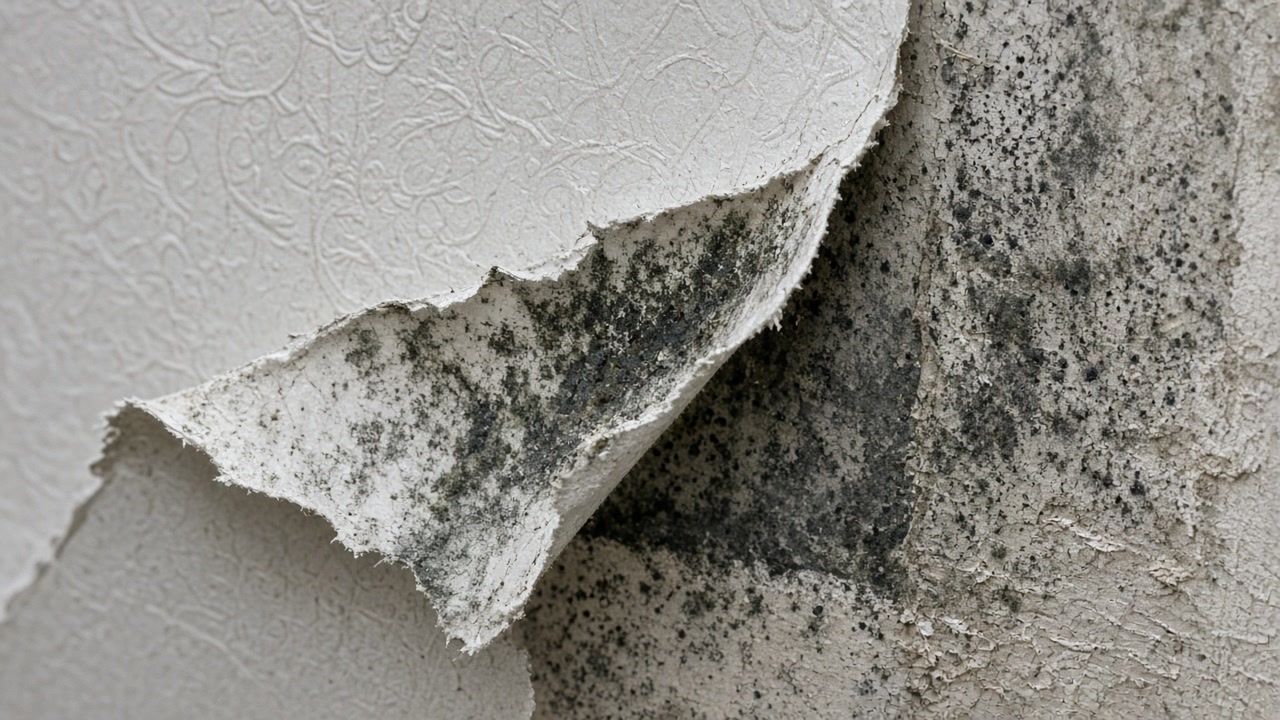
Taking out the layer that wet a Mandeville wall
If a Mandeville wall grew mold on its cavity side, the removal is not finished when the moldy drywall is out. The layer that caused it has to go too: a kraft or foil-faced batt turned to the room, a polyethylene sheet behind the drywall, or a vinyl covering on the face. The LSU AgCenter's guidance for this climate is that the interior side of a wall should be fully permeable, with any air barrier and vapor retarder toward the exterior, and that none at all beats one on the wrong side. So the scope lists what comes out and then what goes back: insulation without a room-side retarder and a permeable finish.
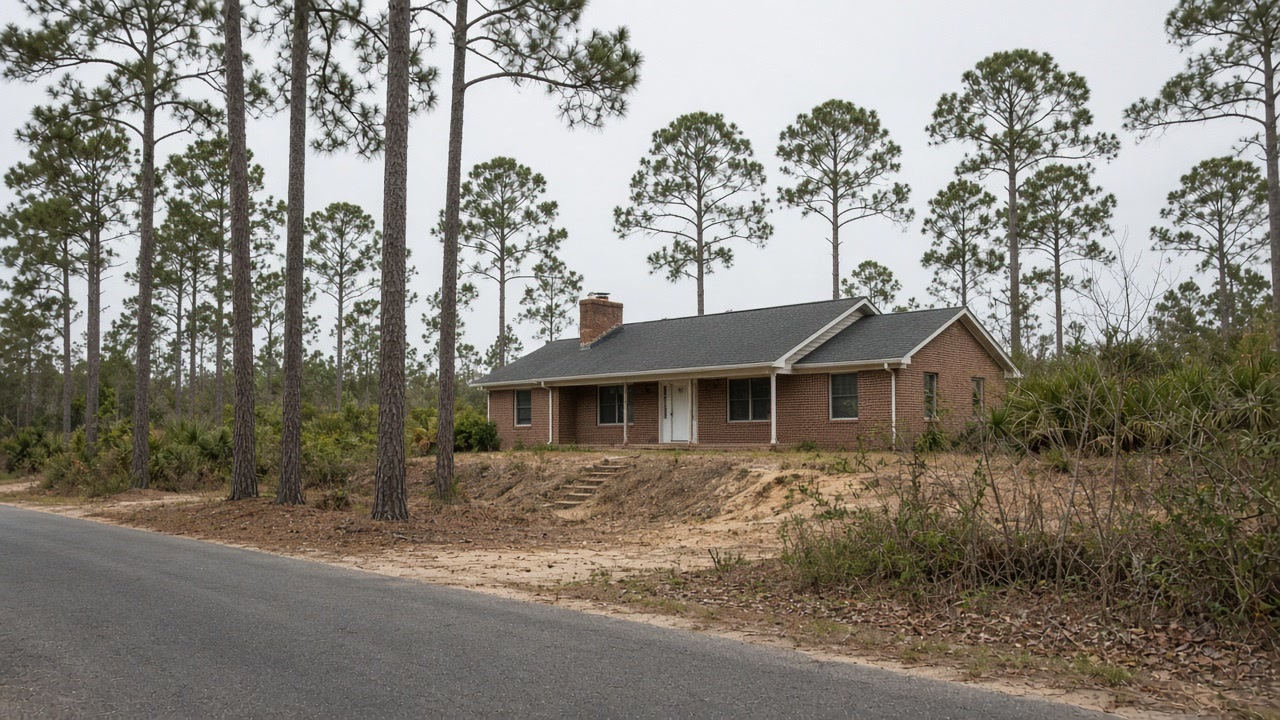
Do you know what is behind the Mandeville drywall?
Faced batts, plastic sheet or neither. Tell us, or send the survey, and the removal scope follows from it.
Mandeville removal questions about barriers and permits
Should the new insulation in my Mandeville wall have a vapor barrier?
Not on the room side. The LSU AgCenter says that in a hot-humid climate moisture flows from outside to inside most of the year, so the interior side should stay fully permeable, and that having no vapor barrier on the interior is preferable to having one on the wrong side. The remediator's scope should specify what goes back, not just what comes out.
Does a Mandeville removal need a permit?
If framing, sheathing or a wall section is replaced, it is a question for the office that governs the address: the city of Mandeville inside its limits, St. Tammany Parish outside them. The contractor doing the work should say in writing which one and whether a permit applies.
Send the Mandeville survey or the wall as it is
A person reads it and arranges a remediator licensed for the job, with the rebuild specified.