
New Orleans, the surrounding parishes, and the North Shore towns across Lake Pontchartrain
Mold Removal in New Orleans and the Surrounding Parishes
Get the affected material out under containment, take the cause out with it, and have the work priced against a written scope that the removal firm did not write.
Mold Removal quote
Four things cover most of it: which room, what the wall is built of, whether the water came from a leak or the wall was sweating, and whether a written scope exists yet. With those we can usually say whether this is a contract or an afternoon.
Would you rather talk it through? Call (315) 640-3590.
$100 off your first job
Credited by us on your first booked job.
- One credit per customer per property, on your first booked job.
- Valid through December 31, 2026.
Mention this offer when you book. Full terms.
What comes out, what goes back, and who signs it off
A removal takes out the material the growth has gone into, cleans what stays, dries the structure to a reading and leaves the room ready to be put back. In this metro the part that decides whether it lasts is the cause, and the cause is frequently sitting in plain sight on the wall. The LSU AgCenter's position for a hot-humid climate is that the inside face of an exterior wall has to stay as permeable as possible, and that having no vapor barrier on the inside is more important than having one outside: none is preferable to one on the wrong side. So stripping vinyl wallcovering off an exterior wall, or turning a foil-faced batt around, is a genuine repair here rather than redecorating, and a removal that replaces the drywall and leaves the condensing plane in place has bought you a few seasons. The order of work follows from that. The water source closes first, the material comes out second, the wall goes back in a form that can dry inward. And the whole thing is priced against a scope written by somebody else: R.S. 37:2158(A)(19)(c) makes it a violation for a mold remediation contractor to perform both mold assessment and mold remediation on the same property, and (d) makes it a violation to own an interest in both entities. Above seven thousand five hundred dollars the contractor also holds a state license you can check yourself in one click, and owes you a written report.
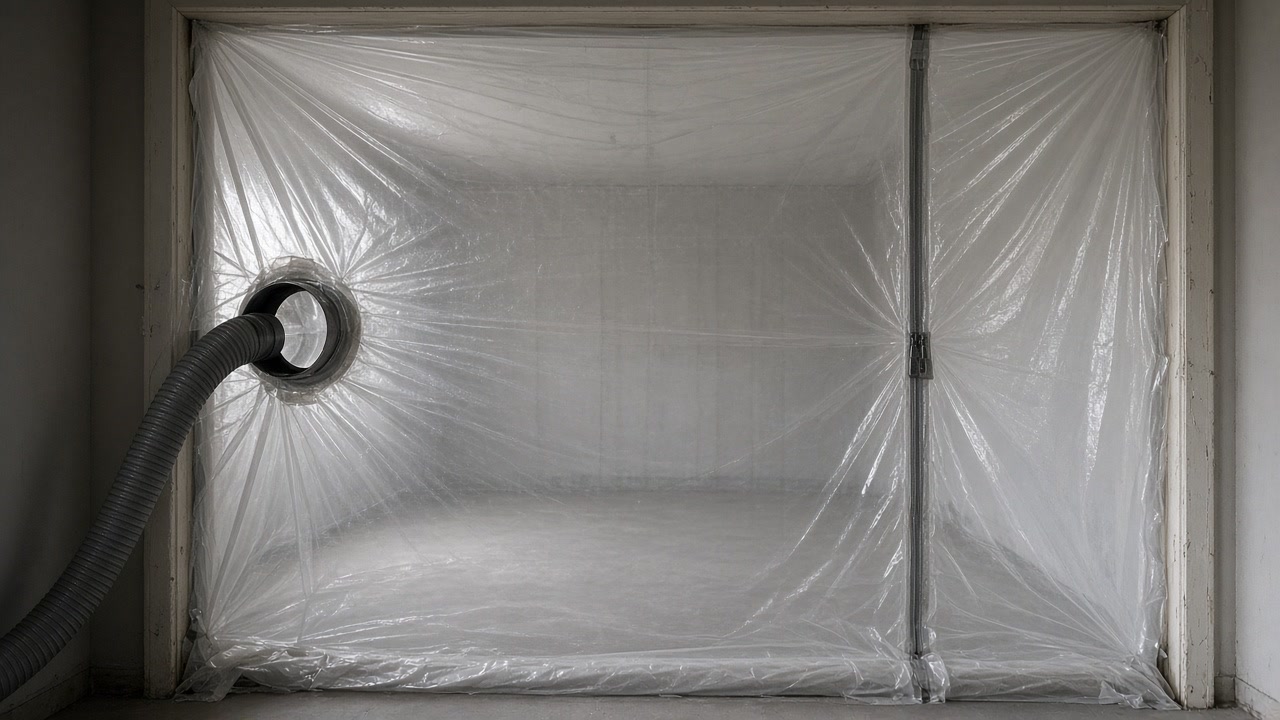
- Containment and negative air around the work area, sized to the area actually affected rather than to the room it happens to sit in
- Controlled removal of the porous material the growth has gone into: drywall, wallcovering, batt insulation, ceiling tiles, carpet and pad, which federal guidance expects to be discarded rather than saved
- Taking the condensing plane off the exterior wall where that is what caused it: vinyl wallcovering, interior polyethylene, and foil or kraft facings turned toward the room
- HEPA vacuuming and damp wiping of everything that stays, with cleaning rather than spraying, because the federal guidance does not treat biocide application as a routine part of a cleanup
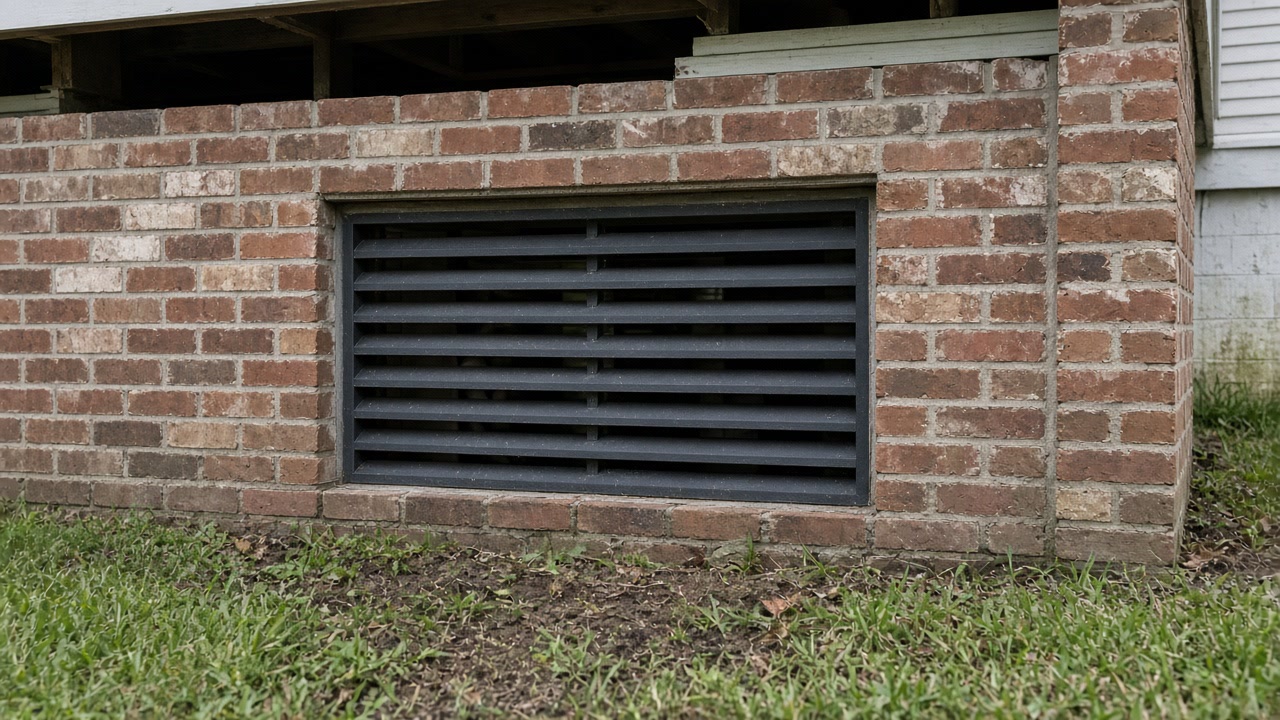
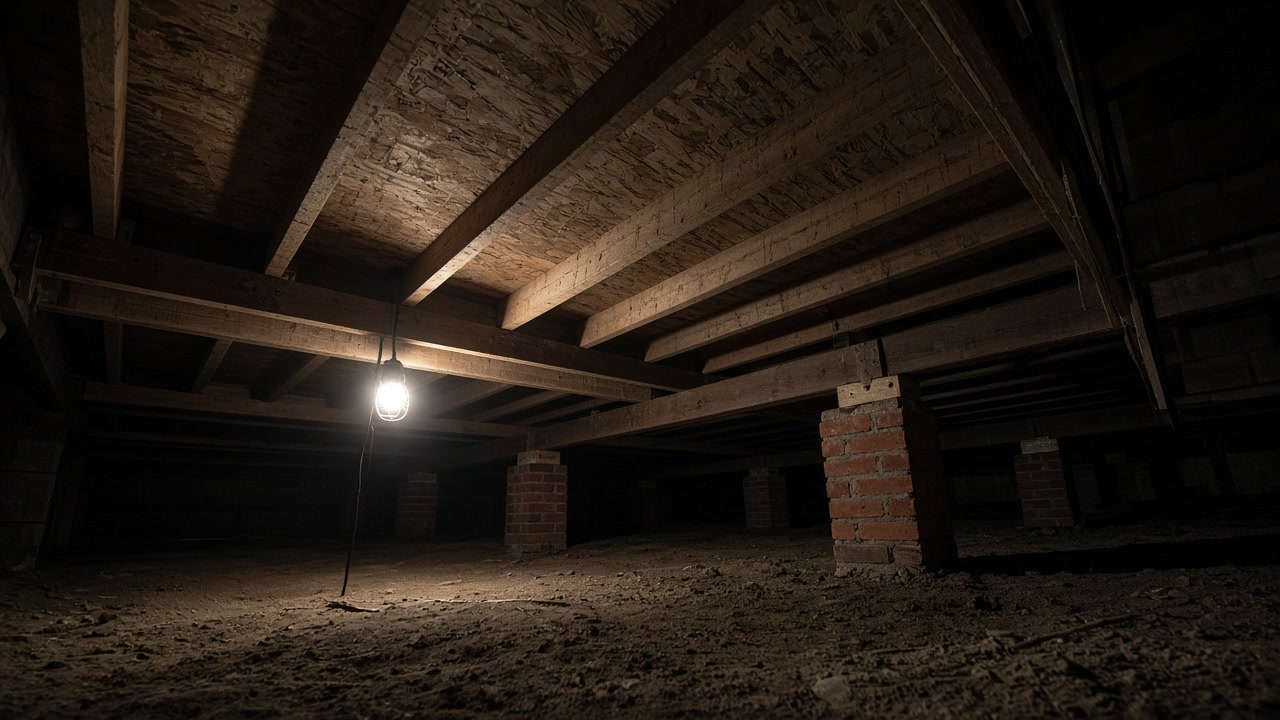
- Work under a raised house: joists and subfloor, wet insulation, ground cover, and the foundation openings that are feeding warm outdoor air into a cool space
- Slab work: baseboard, bottom plate and the lower band of drywall, with the leak in or under the concrete located and closed before anything is replaced
- Air handler, plenum and duct cleaning where the system is distributing the problem rather than just cooling around it
- Drying the structure to a measured reading before anything is closed up, with the house shut and mechanical dehumidification rather than open windows
- Rebuild specified so the wall can dry toward the room, and in flood damage resistant material where the lower floor is exposed to it
- Permits pulled by the contractor where the work opens a wall or touches the structure, filed with the right authority for the parish rather than the mailing address
- A final walk with the company that wrote the scope, so the sign-off comes from a party that did none of the cutting
What moves the price of a removal in this metro
Nothing is cut until the scope is settled, and what settles it is whether the wall leaked or sweated, what the wall is made of, and which of your parish's permissions the job turns out to touch.
Whether the cause is a leak or the room's own air
This is the single biggest fork in the price and it is settled before any quote is worth reading. A leak means finding and closing a pipe, a roof or a flashing and then removing what it soaked. A condensing wall means the water came out of the air onto a cold surface, and the repair may be as small as stripping a wallcovering and adding dehumidification. The LSU AgCenter puts it bluntly: no barrier on the inside face beats a barrier on the wrong side. Removing the wrong-side layer is worth more than adding anything.
What the wall is built of, and what was added to it later
31.4 percent of New Orleans housing units date from 1939 or earlier, against 6.1 percent for Louisiana as a whole. Pre-war construction here was raised, wood framed and originally able to dry in both directions, so what comes off the wall is often plaster and original trim, and what caused the problem is usually something applied to it in the last fifty years. None of that goes back the way a sheet of drywall does, and the scope has to say which parts are coming off carefully and which are being replaced.
How far the water moved before you saw it
Because the condensation forms behind a low-permeance layer, the growth sits on the back of the wallcovering, the back of the drywall or the cavity side of the insulation, and the stain that finally appears seems to have no source. On a slab the same thing happens sideways: water wicks through concrete into the bottom plate and shows a foot from the break. The wet area is almost always larger than the marked area, and it is the wet area that gets priced.
Whether the work crosses seven thousand five hundred dollars
That figure is where Louisiana's definition of a mold remediation contractor begins. Above it the firm must hold the state classification, must give you a written report, and may not have assessed the same property. Below it none of those duties exist, which is where most residential jobs sit. It is not a reason to distrust a small job, it is a reason to know which protections are actually in play on yours.
Whether anyone offers to split the contract
R.S. 37:2158(B)(1) provides that any division of a contract or scope of work into parts which would avoid the need for a license is disregarded, and the parts treated as one. The legislature wrote that clause because the dodge was predictable. If a single job arrives as two smaller invoices, the person writing them has told you the job is over the threshold and that they would rather it were not.
Whether the job needs a permit, and who is pulling it
The City of New Orleans requires a permit to construct, enlarge, alter, repair, move or demolish a building, and exempts interior painting and papering. A real mold repair opens the wall, so expect a permit to be part of it. And nine of the sixteen places in this service area are Census designated places with no municipality of their own, so for those addresses the permit, the inspection and the floodplain rules come from the parish. A contractor who files with the wrong authority costs you weeks.
Whether the repair crosses half the value of the structure
New Orleans requires a benchmark certificate from a registered land surveyor, sealed and dated within the last six months, where work exceeds 50 percent of the value of the structure. Crossing that line turns a repair into a substantial improvement that has to meet current flood elevation rules, which is a different project with a different budget. On a modest house a large mold repair can get there. Ask for the value calculation before the work starts, not after.
Whether the lower floor is likely to get wet again
Across the six parishes here the federal multiple loss property dataset lists 24,518 addresses, and Laplace sits outside the completed hurricane and storm damage risk reduction system, with the West Shore Lake Pontchartrain project still under construction. Where that is your situation, the rebuild half of the scope should be written in flood damage resistant material rather than in ordinary finishes. It costs a little more once and saves the whole job twice.
Does the drywall actually have to go?
A condensing wall and a leaking wall look identical and cost very differently. Send us the room and what is on that wall, and we will tell you which one you are looking at. No obligation either way.
Water first, then walls: the order a removal runs in
Start from a scope the removal firm did not write
Quantities, methods, containment and the moisture repair, set out by the assessment. Louisiana makes it a violation for a mold remediation contractor to perform both halves on the same property, and to hold an interest in both entities, so the separation is the law above the threshold and our standing practice below it.
Close the water first
A pipe, a roof, a flashing, a failed condensate line, or a cold surface the air conditioning is making. A wall opened while water is still arriving is a wall that gets opened twice. Where the cause is condensation, closing it means removing the wrong-side barrier and adding dehumidification, not finding a leak that was never there.
Set containment before anything is cut
Sheeting, negative air and a route out of the house that does not run through the rest of it. Sized to the affected area established by the survey, so you are not paying to contain a room because the growth happened to be in it.
Take out the material, and take off the wrong-side layer
The EPA is clear that absorbent and porous materials may have to be thrown away if they become moldy. Wallcovering, wet insulation, the affected drywall and any carpet over a slab that has been damp before come out. On an exterior wall the vinyl, the poly or the misturned facing comes off with them.
Clean what stays rather than spray it
HEPA vacuuming and damp wiping of framing, masonry and anything hard that is being kept. The EPA states that using a chemical or biocide that kills mold, chlorine bleach for example, is not recommended as a routine practice during cleanup. A quote that is mostly chemical application, with no removal and no moisture work, is not describing this.
Dry the structure to a reading, with the house closed
Not until it looks dry, until a meter says so against an unaffected part of the same building. And with the house shut: at 88 percent mean relative humidity at six in the morning, opening a New Orleans house to dry it in summer brings water in rather than taking it out.
Put it back so the wall can dry toward the room
The LSU AgCenter's ideal hot-humid assembly keeps the interior side fully permeable and puts the air barrier and any vapor retarder outboard. In practice that means latex over the new board, no vinyl going back on an exterior wall, and any facings turned away from the room. It is the cheapest part of the job and the part that decides whether you do this again.
Verify with the firm that wrote the scope, and get it in writing
The assessment company re-reads and re-photographs the area and confirms the work matched the document. Above the statutory threshold a written report from the remediation contractor is not a courtesy, it is a duty under R.S. 37:2158(A)(19)(a), and not receiving one is a reportable matter.
What mold removal looks like

What a removal hands to others, and when you need no one
When you may not need this at all
- If the affected patch is under about ten square feet, roughly three feet by three feet, the EPA says that in most cases a homeowner can handle the job themselves. Nobody needs to be hired to wipe down a bathroom ceiling, and a firm that quotes a project for one is quoting for the wrong thing.
- If the finding is condensation on a sound wall with no leak behind it, the work may not be a removal at all. Stripping the wallcovering, cleaning the surface and putting a dehumidifier in the room can be the entire repair, and that is an outcome we would rather tell you about now than after a containment is up.
- If material got wet in the last day or two and nothing is growing yet, this is a drying job and the clock is what matters. The EPA puts the window at 24 to 48 hours and says that material dried inside it will in most cases not grow mold. Fans and a dehumidifier today beat a remediation quote next week.
- If the growth is in a rental, the picture changes before you spend anything. Louisiana exempts an owner or their managing agent or employee from mold remediation licensure on property the owner holds, so work already done by the building's own crew carried none of the statute's duties. Renter share runs above half of occupied homes in Gretna and Terrytown and just under half in New Orleans, so this is not an edge case here.
- If you are about to open a wall in a pre-war house, deal with asbestos and lead first. They are separate disciplines with their own rules, and on stock built in 1939 or earlier they belong before the demolition rather than after it.
What is out of scope
- The assessment and the final clearance check. Both sit with a separate firm, because Louisiana makes it a violation for one mold remediation contractor to do both on the same property and to own an interest in both entities.
- The plumbing, roofing, duct or drainage repair that closes the water source. It is arranged, it is in the scope, and it is a different trade with its own price.
- Foundation and structural work. The ground under this metro moves unevenly rather than uniformly, so what a slab or a pier line is doing is a question for an engineer about your address.
- Asbestos and lead abatement.
- Renovation beyond putting back what came out. A remediation restores the room to the condition the scope describes; a new kitchen is a different contract.
- Any promise about what the air will read afterwards. The EPA states that no federal limits exist for mold or mold spores, so there is no number a clearance could be measured against, and a report presenting a spore count as a pass is presenting a judgment as a standard.
- Insurance claim handling. The records, readings and photographs are provided; arguing the claim with an adjuster is not part of the work.
- Any opinion on health, symptoms or diagnosis.
Removals arranged across the six parishes we cover
- Mold Removal in New Orleans
- Mold Removal in Metairie
- Mold Removal in Kenner
- Mold Removal in Gretna
- Mold Removal in Harvey
- Mold Removal in Marrero
- Mold Removal in Chalmette
- Mold Removal in Slidell
- Mold Removal in Terrytown
- Mold Removal in Westwego
- Mold Removal in River Ridge
- Mold Removal in Arabi
- Mold Removal in Belle Chasse
- Mold Removal in Mandeville
- Mold Removal in Covington
- Mold Removal in Laplace
What owners ask before a removal starts
Can the firm that inspected my house also do the removal?
Not on the same property, where the removal work exceeds seven thousand five hundred dollars. R.S. 37:2158(A)(19)(c) makes performing both mold assessment and mold remediation on one property a violation for a mold remediation contractor, and subsection (d) extends that to owning an interest in both entities, so two trading names under one owner is the same violation with extra paperwork. Below the threshold the statute reaches nobody, which is precisely why we keep the two halves apart at every price rather than only where the law obliges it.
How do I check that a contractor actually holds the license?
The Louisiana State Licensing Board for Contractors publishes a free Contractor Search at https://arlspublic.lslbc.louisiana.gov/Public/DetailedSearch/, which can be queried by name, license number, city, parish, type of contractor or qualifying party, and returns only currently active records. Check the exact name on the quote. A firm that does not appear is either unlicensed or trading under a different legal name, and both are worth a question. The board's own note on that page is that the data is a courtesy and may not reflect very recent changes.
What does that license actually prove?
Something real, and less than most people assume. R.S. 37:2156.1(G) requires an applicant to show at least twenty-four hours of training in mold remediation and basic mold assessment, workers compensation cover and liability cover of at least fifty thousand dollars, and R.S. 37:2156.1(B)(2) sets a net worth test of twenty-five thousand dollars. That is a floor, it is worth having, and it says nothing about whether the firm has worked on your foundation type. Ask that separately.
My quote sits just under the threshold and there is no license number. Is that allowed?
Yes, and it is the ordinary situation. Louisiana defines a mold remediation contractor by the size of the job: above seven thousand five hundred dollars in labor and materials, below it nothing in the classification applies. What you lose with it is the statutory written report and the rule keeping assessment apart from removal, so on a smaller job those have to come from how the work is arranged rather than from the state. Watch one thing in particular: if a single job is offered as two invoices that each land under the line, R.S. 37:2158(B)(1) already disregards that division, and the person offering it has told you what the job is worth.
Will it come back?
If the cause is still there, yes, and that is the honest answer rather than a sales line. The EPA states there is no practical way to remove every spore from an indoor space and that the way to control growth is to control moisture. In this climate the cause is often a surface the air conditioning is holding below the dew point of the air touching it, so a removal that replaces material and leaves a vinyl wallcovering or a misturned foil facing on the exterior wall has treated the symptom. Ask any quote what the moisture source is and how it is being closed.
Do I need a permit to have mold work done?
Probably, once a wall is opened. The City of New Orleans requires a permit to construct, enlarge, alter, repair, move or demolish a building, while interior painting and papering is exempt. If your address is in Metairie, Harvey, Marrero, River Ridge, Terrytown, Chalmette, Arabi, Belle Chasse or Laplace, there is no municipal government there at all and the permit comes from the parish. Watch the 50 percent of value line too: cross it in New Orleans and a sealed benchmark certificate from a registered land surveyor is required, and the work becomes a substantial improvement subject to current elevation rules.
Tell us what the water reached
Enough to settle the order of work, what has to be opened, and who has to sign off before a saw comes into the house.