
What Louisiana Mold Law Actually Requires
Louisiana licenses mold remediation and bars one company from doing both halves of the job. R.S. 37:2158(A)(19)(c) makes it a violation for a mold remediation contractor to perform both mold assessment and mold remediation on the same property, and (d) extends that to owning an interest in both entities. The license itself proves twenty-four hours of training, fifty thousand dollars of liability cover and a twenty-five thousand dollar net worth, and you can check any name against the board's own Contractor Search in about a minute.
Already know you need someone out? Call (315) 640-3590.
The four things R.S. 37:2158(A)(19) makes a violation
The statute is short and worth reading in its own words rather than in anyone's summary. It is a violation for a mold remediation contractor to: (a) fail to provide a written report to each person for whom he performs such services for compensation; (b) render, submit, subscribe, or verify false, deceptive, misleading, or unfounded opinions or reports; (c) perform both mold assessment and mold remediation on the same property; and (d) own an interest in both the entity which performs mold assessment services and the entity which performs mold remediation services on the same property. Read (a) and (c) together and you have the shape of a legitimate job in this state: somebody looks, writes down what they found, and somebody else removes it. Read (b) and you have the reason. An alarming verbal finding with nothing behind it is not merely poor practice here, it is named in the licensing statute.
Clause (d) exists because the legislature expected the dodge
Subsection (c) on its own would be easy to walk around. Set up a second company, have it do the assessment, have the first one do the removal, and the letterhead says two firms. Louisiana closed that in the statute itself: it is a violation to own an interest in both the entity which performs mold assessment services and the entity which performs mold remediation services on the same property. Legislatures do not write clauses against moves nobody makes. The practical version for a homeowner is one question, and it is not rude to ask it: do the assessor and the removal firm share an owner? Two company names are not two companies, and the answer to that question is checkable against the board's own register, where the qualifying party is one of the fields you can search on.
What twenty-four hours and fifty thousand dollars actually proves
R.S. 37:2156.1(G) requires an applicant, before a license is issued, to furnish evidence of at least twenty-four hours of training in mold remediation and basic mold assessment, together with insurance certificates evidencing workers' compensation coverage and liability insurance of at least fifty thousand dollars. R.S. 37:2156.1(B)(2) adds a net worth test of twenty-five thousand dollars or more for the mold remediation specialty. That is a real floor and it is a low one, and saying so is more useful than inflating it. Twenty-four hours of training and fifty thousand dollars of cover tells you the firm cleared a bar the state set. It does not tell you the state inspected the firm, endorsed it, or stands behind the work, and it says nothing about whether anyone there has worked on your foundation type. Ask the second question separately: what have you done on a raised pier and beam house, or on a slab, in this parish?
Louisiana licenses no one to assess mold, whatever a badge says
This is the easiest false impression to pick up in this market, and it runs the opposite way from the usual one. Louisiana's contractor licensing law creates exactly one mold classification, mold remediation. The board's classification list holds no mold assessment or mold inspection classification, and R.S. 37:2150.1(11) defines only the mold remediation contractor. So there is no state license, registration or state-issued credential for a mold assessor or a mold inspector in Louisiana. Anyone advertising a state-issued assessor credential here is describing something the state does not issue. It also means you cannot check an assessor against a state register, because there is no register for them. What the law does give you instead is the separation rule and the written report, so those are the two things to ask about, and they are worth more than a badge because they are enforceable.
How to check a name against the state register in one click
The board publishes a free public lookup called Contractor Search, at arlspublic.lslbc.louisiana.gov, and it can be queried by contractor name, license number, city, parish, type of contractor and qualifying party. It returns only contractors whose license or registration is currently active, and the page carries the board's own caution that the information is a courtesy and may not reflect recent changes. Do it before any money moves. A firm that does not appear is either unlicensed or trading under a legal name different from the one on the quote, and both of those are worth one question rather than an assumption. This is the whole difference between a checkable statement and a logo on a website: the register is the state's own record and it takes a minute to read. We would rather you looked than took our word for it.
The duties begin above $7,500, so on a small job they reach nobody
The separation rule and the written report duty apply to a mold remediation contractor, and R.S. 37:2150.1(11) defines that person by the size of the job: someone whose mold removal, cleaning, sanitizing, demolition or other treatment costs more than seven thousand five hundred dollars in labor and materials. R.S. 37:2150.1(4)(a)(iv) sets the license trigger at the same figure, and the board's own classification page states it in one line: a license is required when the value exceeds $7,500. Below that number the person doing your work is not the regulated person, so neither the written report duty nor the ban on doing both halves attaches to them at all. That is most residential jobs. It is the single most important thing to understand about mold law in this state, and it has its own guide.
A landlord's own maintenance crew is exempt from all of it
R.S. 37:2157(A)(17) exempts from mold remediation licensure a residential property owner performing mold remediation on his own property, and an owner or tenant, or a managing agent or employee of an owner or tenant, performing mold remediation on property owned or leased by them. The exemption stops only if that agent or employee is in the business of performing mold remediation for the public. So if you rent and the building's own staff handled it, no license requirement applied, no written report duty applied and no separation rule applied. That matters in this metro because renting is common: about half of occupied homes in Gretna, Terrytown and New Orleans are rented. It is not a reason to distrust an in-house repair. It is a reason to ask for the same things in writing that the statute would have required from a contractor.
Why the written report is worth more to you than the license number
A license is a fact about a firm. A written report is a fact about your building, and it is the thing you can act on, compare quotes against and still have in a year. Two federal agencies reduce the case for the alternative: the EPA states that in most cases, if visible mold growth is present, sampling is unnecessary, and that since no EPA or other federal limits have been set for mold or mold spores, sampling cannot be used to check a building's compliance with federal standards. The CDC states plainly that it does not recommend mold testing. So a report that is mostly laboratory numbers is presenting a judgment as though it were a standard. The EPA's own framing is the one to hold a report to: the way to control indoor mold growth is to control moisture. Ask what the moisture source is, how it was located, and how it will be closed. If the report cannot answer those three, the laboratory page is decoration.
What this statute means for how a job here is arranged
Because (c) and (d) bar one entity, and any commonly owned entity, from doing both halves on a property, an arrangement that routed both halves of a job above $7,500 to the same firm, or to two firms under one owner, would put that contractor in violation of the state licensing statute. That is not a preference we adopted, it is the shape the law requires, and it also happens to be the honest way to buy this work: the opinion about how much has to come out is not for sale to the person who would be paid to remove it. We arrange the assessment with one firm and the removal with another, separately owned, at every price including under the threshold where the statute does not reach. One more practical point on authority: nine of the sixteen places we cover are Census designated places with no municipal government of their own, so permits, inspections and floodplain rules come from the parish rather than from the mailing address. Send us what you are seeing and we will start with the assessment.
Sources used in this guide

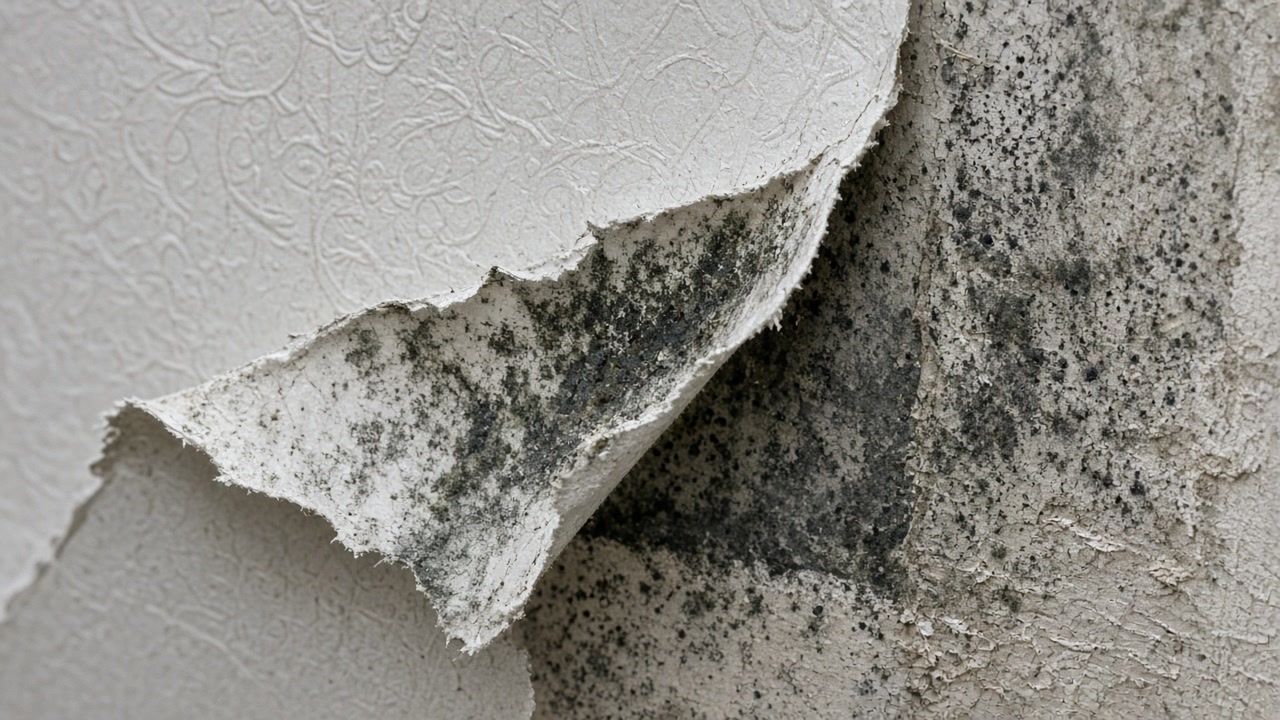
Louisiana R.S. 37:2158(A)(19)(c) makes it a violation for a mold remediation contractor to perform both mold assessment and mold remediation on the same property.
Source: Louisiana State Licensing Board for Contractors, Contractors Licensing Law and Rules and Regulations, effective August 1, 2022, accessed 2026-09-22
Louisiana R.S. 37:2158(A)(19)(d) makes it a violation for a mold remediation contractor to own an interest in both the entity which performs mold assessment services and the entity which performs mold remediation services on the same property.
Source: Louisiana State Licensing Board for Contractors, Contractors Licensing Law and Rules and Regulations, effective August 1, 2022, accessed 2026-09-22
Louisiana R.S. 37:2158(A)(19)(a) makes it a violation for a mold remediation contractor to fail to provide a written report to each person for whom he performs such services for compensation.
Source: Louisiana State Licensing Board for Contractors, Contractors Licensing Law and Rules and Regulations, effective August 1, 2022, accessed 2026-09-22
Louisiana R.S. 37:2158(A)(19)(b) makes it a violation for a mold remediation contractor to render, submit, subscribe, or verify false, deceptive, misleading, or unfounded opinions or reports.
Source: Louisiana State Licensing Board for Contractors, Contractors Licensing Law and Rules and Regulations, effective August 1, 2022, accessed 2026-09-22
Louisiana R.S. 37:2156.1(G) requires mold remediation license applicants to furnish, before a license is issued, evidence to the board that the applicant has satisfactorily completed at least twenty-four hours of training in mold remediation and basic mold assessment, together with insurance certificates evidencing workers' compensation coverage and liability insurance in a minimum amount of fifty thousand dollars.
Source: Louisiana State Licensing Board for Contractors, Contractors Licensing Law and Rules and Regulations, effective August 1, 2022, accessed 2026-09-22
Louisiana R.S. 37:2156.1(B)(2) provides that home improvement, mold remediation, and labor only specialties shall have a net worth of twenty-five thousand dollars or more.
Source: Louisiana State Licensing Board for Contractors, Contractors Licensing Law and Rules and Regulations, effective August 1, 2022, accessed 2026-09-22
Louisiana R.S. 37:2150.1(11) defines the regulated person by the size of the job: a mold remediation contractor means any person who engages in removal, cleaning, sanitizing, demolition, or other treatment, including preventative activities, of mold or mold-contaminated matter that was not purposely grown at that location and where the costs for such labor and materials exceed seven thousand five hundred dollars. Mold remediation applies only to the regulation of mold-related activities that affect indoor air quality and does not apply to routine cleaning when not conducted for the purpose of mold-related activities intended to affect indoor air quality.
Source: Louisiana State Licensing Board for Contractors, Contractors Licensing Law and Rules and Regulations, effective August 1, 2022, accessed 2026-09-22
Louisiana R.S. 37:2150.1(4)(a)(iv) lists among the work for which a state license is required any mold remediation where the entire cost exceeds seven thousand five hundred dollars.
Source: Louisiana State Licensing Board for Contractors, Contractors Licensing Law and Rules and Regulations, effective August 1, 2022, accessed 2026-09-22
Louisiana R.S. 37:2158(B)(1) provides that in determining the value of a project, any division of a contract or scope of work into parts which would avoid the necessity of a license to bid, contract, or perform the work, will be disregarded, and the divided parts of the contract or scope of work will be treated as one contract or scope of work for purposes of determining whether a license is required.
Source: Louisiana State Licensing Board for Contractors, Contractors Licensing Law and Rules and Regulations, effective August 1, 2022, accessed 2026-09-22
Louisiana R.S. 37:2157(A)(17) exempts from mold remediation licensure a residential property owner who performs mold remediation on his own property, and an owner or tenant, or a managing agent or employee of an owner or tenant, who performs mold remediation on property owned or leased by the owner or tenant, with that exemption not applying if the managing agent or employee engages in the business of performing mold remediation for the public.
Source: Louisiana State Licensing Board for Contractors, Contractors Licensing Law and Rules and Regulations, effective August 1, 2022, accessed 2026-09-22
Louisiana's contractor licensing law creates one mold classification, mold remediation. The board's classification list contains no mold assessment or mold inspection classification, and R.S. 37:2150.1(11) defines only the mold remediation contractor. There is no Louisiana state license, registration or state certification for a mold assessor or mold inspector.
Source: Louisiana State Licensing Board for Contractors, classification list, Mold Remediation, accessed 2026-09-22
The board's own classification page for mold remediation states that a license is required when the value exceeds $7,500, that the classification requires twenty-four hours of board approved training in mold remediation and assessment, and that mold remediation refers to removal, cleaning, sanitizing, demolition, or other treatment, including preventative measures, of mold contaminated materials not purposely grown at that location.
Source: Louisiana State Licensing Board for Contractors, classification list, Mold Remediation, accessed 2026-09-22
The board publishes a free public contractor search that can be queried by contractor name, license number, city, parish, type of contractor and qualifying party, and returns only contractors whose license or registration is currently active. The page carries the board's own caution that the information is provided as a courtesy and may not reflect recent changes or updates.
Source: Louisiana State Licensing Board for Contractors, contractor search, accessed 2026-09-22
Because Louisiana R.S. 37:2158(A)(19)(c) and (d) bar one entity, and any commonly owned entity, from performing both the assessment and the remediation on a property, an arrangement that routed both halves of a job above $7,500 to the same firm, or to two firms under one owner, would put that contractor in violation of the state licensing statute.
Source: Louisiana State Licensing Board for Contractors, Contractors Licensing Law and Rules and Regulations, effective August 1, 2022, accessed 2026-09-22
Where mold growth can already be seen, EPA guidance says sampling is in most cases unnecessary.
Source: United States Environmental Protection Agency, accessed 2026-09-22
The EPA states that since no EPA or other federal limits have been set for mold or mold spores, sampling cannot be used to check a building's compliance with federal mold standards.
Source: United States Environmental Protection Agency, accessed 2026-09-22
The CDC states that it does not recommend mold testing.
Source: Centers for Disease Control and Prevention, About Mold, accessed 2026-09-22
The EPA states that there is no practical way to remove every mold spore from an indoor space, and that the way to control indoor mold growth is to control moisture.
Source: United States Environmental Protection Agency, accessed 2026-09-22
Renter share of occupied homes across this service area ranges from 20.2 percent in Belle Chasse and 22.5 percent in Laplace to 48.8 percent in New Orleans, 50.8 percent in Terrytown and 51.2 percent in Gretna.
Source: United States Census Bureau, American Community Survey 2020-2024 five year estimates, accessed 2026-09-22
Five of the sixteen places in this service area are Census designated places with no municipal government of their own. The Census Bureau's 2024 gazetteer records Metairie, Harvey, Marrero, River Ridge and Terrytown as CDPs, along with Chalmette, Arabi, Belle Chasse and Laplace. New Orleans, Kenner, Gretna, Westwego, Slidell, Mandeville and Covington are incorporated cities.
Source: United States Census Bureau, 2024 Gazetteer Files, Places, Louisiana, accessed 2026-09-22
Services this guide relates to
Need someone to look at it?
Send the details and we will come back to you.