Assessment
A stain on the wall, a quote in your hand, and no word on the source
Has a contractor priced a tear-out without saying where the water arrives? The assessment is the step that answers it, in writing, from a company that will not do the removal. Tell us the room and the wall, and book it first.
Tell us where it shows
We help you learn whether the water is a leak or your own air, then line up an assessor first and a separate company to remove or dry it.
Before anyone pulls the paper
Photograph the stain, wide and close
Note when it first showed and what changed
Write down what covers the wall
Watch whether it grows after water runs
Ask for the removal company's license number
Keep the assessor away from the removal job
Have the scope on paper before work begins
Four things to tell the contractor
1. Where it shows
Which room and wall is it on, and how high up?
2. When it started
When did you first see or smell it?
3. What covers the wall
Is the wall vinyl paper, gloss paint, tile or paneling?
4. Anything dripping
Does a pipe, roof, window or AC line drip near it?
$100 off your first job
The $100 comes off once your first job in the parishes is booked.
We pay the $100 out of our fee; the contractor's price does not change.
One credit for each customer at each property they own or rent.
Book that first job on or before December 31, 2026, to use it.
Say you have the credit when you book, and we confirm it.
The Room Side promise
- You can ask us anything without paying or signing.
- The source of the water gets settled first.
- Your assessment and your removal stay with separate companies, at any price.
- Your $100 credit is applied the way our Terms say.
The work itself is between you and the company you hire.
Mold Removal New Orleans, (315) 640-3590
Signs this job is next
A stain that keeps coming back
You wiped it or painted over it, and it returned. That means nobody found the source.
A quote that starts with demolition
Anyone who prices a tear-out first has not told you where the water arrives.
A smell with nothing to see
A musty smell in a closet or on a raised floor can start in a cavity you cannot reach.
Paper that bubbles or peels
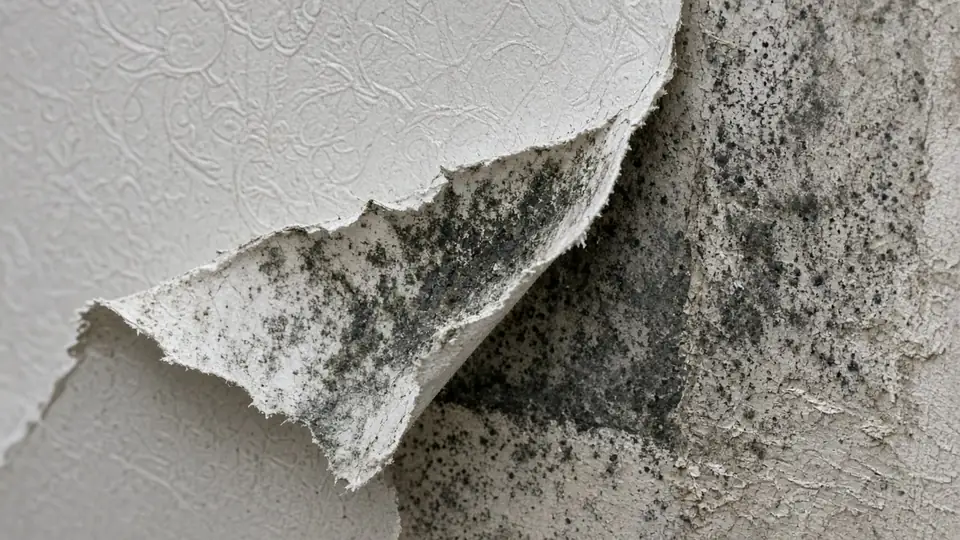
Vinyl or gloss on an outside wall that lifts can have water behind it.
A removal price you want to check
You hold a quote and want findings from someone who will not take the job.
Straight answers about assessment
What does the assessor actually leave with me?
You should receive a written report with photos, moisture readings, the named source of the water and a scope that two removal companies can price. If you are offered only a verbal opinion, ask for it in writing.
Is there a state license for mold assessors?
The state's licensing chapter creates none. Louisiana licenses mold remediation only. So ask the assessor about their training and independence, and look up any removal company's license number on the state board's public search.
Can the company that assesses my house also remove the mold?
On removal work of $7,500 or more, no. The statute bars a mold remediation contractor from doing both on your property. We keep them apart at every price, so your findings stay independent of the quote.
My wall is covered in vinyl wallpaper. Does that matter?
Yes. Federal building guidance lists vinyl wallpaper as a vapor barrier, and water that condenses behind it cannot dry into the room. Tell the assessor before anyone peels it.
How soon after a leak should I book the assessment?
If the house is still wet, dry it first. The clock for damp materials is 24 to 48 hours, the EPA says. Book the assessment when the house is stable and you can point to what got wet.
Do I have to be home for the visit?
Someone should be, so the assessor can reach the wall, the closet and the AC. Tell the assessor in advance about any pets, locked rooms or access to the space under the house.
Will the assessment tell me the price of the removal?
It tells you the scope, not the price. The removal company sets its own price from your written scope, which is why you ask two companies to quote the same work.
What changes with where the water arrives
Your own room air
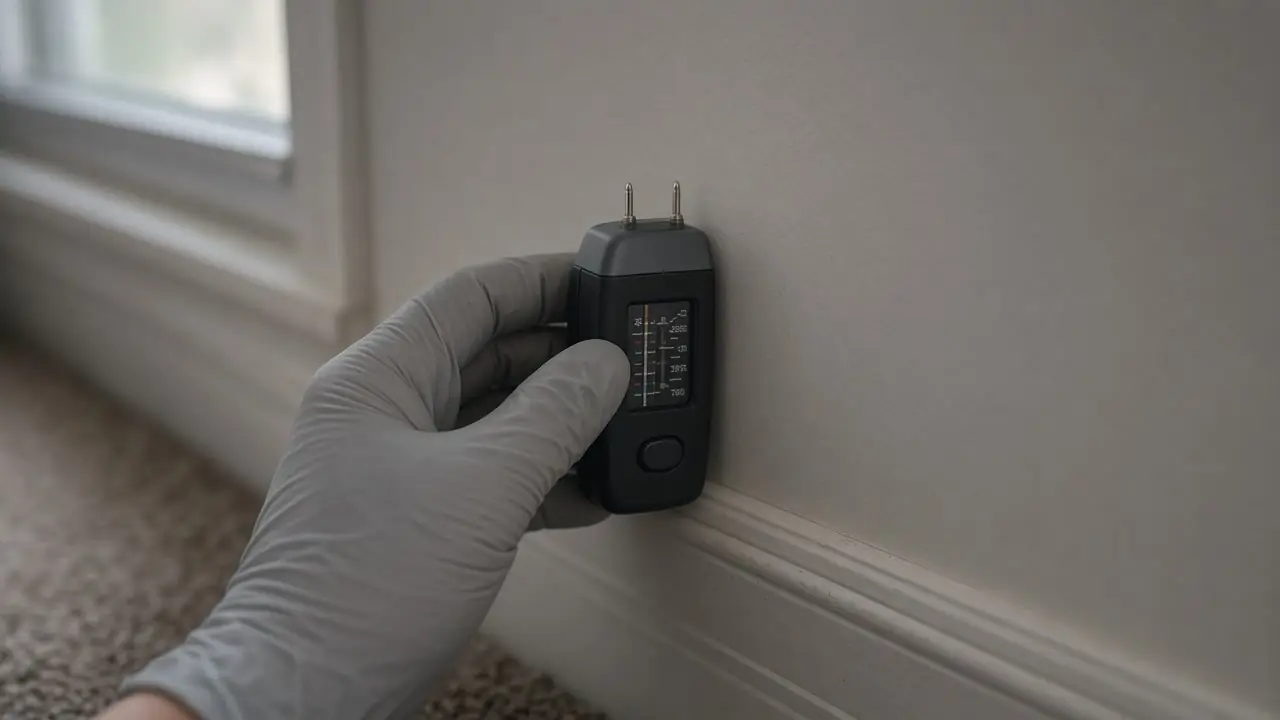
The assessor reads the stained wall against a dry wall in the same room, then checks the paper or paint and the nearest cold register. A cooled outside wall under vinyl paper is the finding to rule in or out. Ask what the readings say about your wall.
A leak
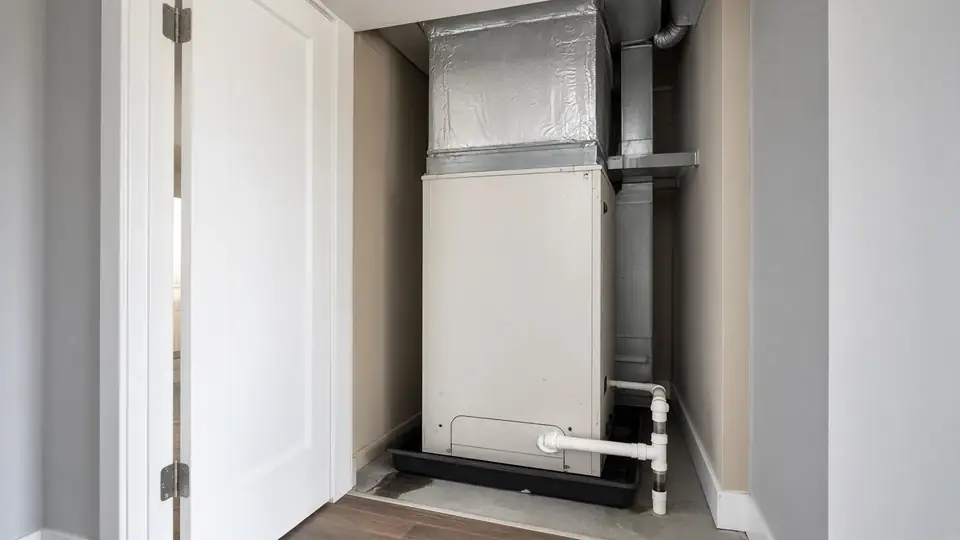
The assessor looks for a drip path: a supply line, a drain, a roof edge, a window head or an AC drain pan. A line cast in a slab may need a plumber's leak check as a second visit, so ask whether you should book one.
The ground under it
Under a raised house the assessor looks at the joists, the vents and the soil. On a slab the question is whether moisture comes up through the concrete or from a line inside it. Tell the assessor which you suspect.
Water that came in
When water came in, the assessor maps which materials got wet and which stayed dry. Drying often comes first. Book the assessment once the house is stable.
Basis: Class I Vapor Retarders Not Installed in Above-Grade Walls in Warm-Humid Climate; Unvented Insulated Crawlspaces, Building America Solution Center
The work, drawn on the wall
Outside air
Summer air carries the water in from this side.
The cool face
Check the paper or paint here before anything else.
Cavity
Ask whether the assessor will read inside the wall.
Register
Say where cold air blows on this wall.
What your house changes
Raised on piers
Ask for a look under the floor, not only the rooms above it. The vents, the joists and the ground tell you half the story.
Slab on the ground
Ask whether a leak check on the slab lines is part of the visit. Lines in concrete are hard to see and easy to miss.
A shared wall or unit
Ask the owner for access, and ask which wall belongs to which unit. The source may sit in a neighbor's pipe or a shared AC line.
Basis: Unvented Insulated Crawlspaces, Building America Solution Center; Class I Vapor Retarders Not Installed in Above-Grade Walls in Warm-Humid Climate
What the job covers
Moisture readings
Ask for readings on the stained wall, the dry wall beside it and the floor under it.
The wall face and cavity
Ask whether the assessor will look behind the paper or into the cavity, and how.
Where the water arrives
Ask for the source named in writing: a leak, your room's air, the ground or a storm.
A written report
Ask for photos, readings and a plain statement of what to fix, remove or dry.
A scope you can price
Ask that the report be written so two removal companies can quote the same work.
How it runs, first call to last paper
You send the details
Tell us the room, the wall, the kind of house and when it started.
You book the assessor
Choose a company that agrees in advance not to bid on the removal.
The visit
The assessor takes readings, looks at the wall face and follows any leak path.
The written findings
You receive the report, then ask removal companies to price that same scope.
Papers to hold
The written report
Photos, readings and the named source, in your hands, not read to you over the phone.
A line on independence
A sentence from the assessor that they will not bid on the removal.
A scope for pricing
A list of what to remove, repair or dry, so two quotes match.
Who should write your findings
You want findings from someone who does not want the removal job. We keep the two apart at every price. At $7,500 or more, Louisiana also stops a removal contractor from assessing and removing on your property, or holding a stake in both companies.
Before you book, ask the assessor three things. What training do they have? Will they put in writing that they will not bid on the removal? What will the report cover? Their answers tell you more than a logo.
Basis: Contractors Licensing Law, Title 37 of the Louisiana Revised Statutes; Class I Vapor Retarders Not Installed in Above-Grade Walls in Warm-Humid Climate
How an assessor reads a wall without cutting it
A good first visit does not start with a saw. The assessor compares a stained wall with a dry one, reads the floor below, checks the paper or paint, and finds where cold air blows. That can tell you whether the water is a leak or your own room's air before any board comes off.
Ask what the assessor will measure and where. If you hear that you must cut a hole before anyone can say anything, ask why a reading will not do. Then book the visit that answers your question first.
When you may not need to book anyone
The EPA's rule of thumb is that a patch under roughly 10 square feet, about three feet square, is one most homeowners can clean. That holds when you know why it got wet and you have fixed that.
If you do not know why, the patch will likely return and you will paint the same wall twice. Describe what you see and we help you choose.

Why a lab test is not the first move
For growth you can already see, the EPA calls sampling unnecessary in most cases. No federal limit exists for mold or spores, it adds, so a lab result cannot prove your house passes. The CDC does not recommend testing.
What you can use is a finding of where the water arrives and what it reached. Ask the assessor what they will measure, and book the assessment that answers that.
What moves the price
- How big the house is, and how many rooms need reading, sets the length of the visit.
- Reaching a crawl space or attic takes longer than reading a wall.
- A suspect line in a slab may need a plumber's leak check on top of the visit.
- A report with more photos and readings takes longer to write.
- Ask the assessor what the fee covers before you book.
- The assessor sets the fee; your $100 comes out of our fee once the job is booked.
Places this job is booked
Find the source first.