Drying
The floor is wet, and the air outside would make it wetter
Did water get into your house this week, from a pipe, a roof or a storm? Do not open every window to dry it. In a New Orleans summer the air outside carries more water than your wet room. Call, and book the drying first.
Tell us where it shows
We help you learn whether the water is a leak or your own air, then line up an assessor first and a separate company to remove or dry it.
Before anyone pulls the paper
Photograph the stain, wide and close
Note when it first showed and what changed
Write down what covers the wall
Have the scope on paper before work begins
Four things to tell the contractor
1. Where it shows
Which room and wall is it on, and how high up?
2. When it started
When did you first see or smell it?
3. What covers the wall
Is the wall vinyl paper, gloss paint, tile or paneling?
4. Anything dripping
Does a pipe, roof, window or AC line drip near it?
$100 off your first job
The $100 comes off once your first job in the parishes is booked.
We pay the $100 out of our fee; the contractor's price does not change.
One credit for each customer at each property they own or rent.
Book that first job on or before December 31, 2026, to use it.
Say you have the credit when you book, and we confirm it.
The Room Side promise
- You can ask us anything without paying or signing.
- The source of the water gets settled first.
- Your assessment and your removal stay with separate companies, at any price.
- Your $100 credit is applied the way our Terms say.
The work itself is between you and the company you hire.
Mold Removal New Orleans, (315) 640-3590
Signs this job is next
Water came in within the last day or two
The sooner it dries the less has to be thrown away.
A pipe or roof leak soaked a floor
Stop the water, then ask for drying before anyone starts to rebuild.
A room that never feels dry
The floor stays cool and damp in summer, even with the AC running.
Carpet or board that stays wet
Materials that will not dry in place need a decision, not more waiting.
Water under a raised floor
The subfloor is wet and the crawl space smells musty after rain.
Straight answers about drying
How soon do wet materials have to dry?
The EPA gives 24 to 48 hours to dry damp materials, and the CDC gives the same after a flood. Book the drying as soon as the water is stopped.
Why not open the windows and run a fan?
In a New Orleans summer the outdoor air is wetter than your room, with a normal relative humidity of 92 percent at 6 a.m. in July and August. Open windows pull in more water than the fan pushes out.
What humidity should the house reach?
The EPA's range is 30 to 60 percent indoors, and the CDC says to stay at or under 50. Ask the company what reading it is aiming for.
Will the drying company cut into my walls?
Sometimes, at the lower wall, to dry a wet cavity. Ask which areas it will open, and why a cut is better than waiting.
My crawl space is wet. Does that count?
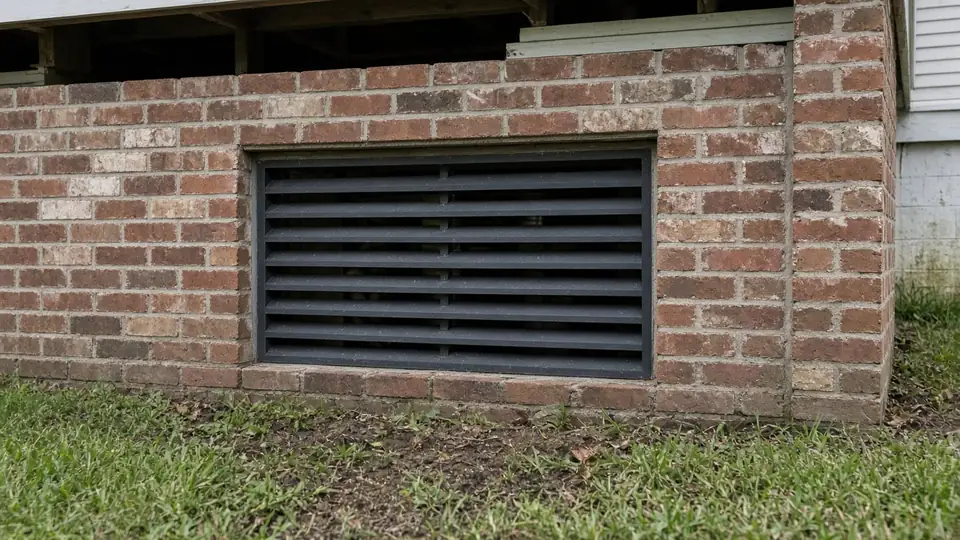
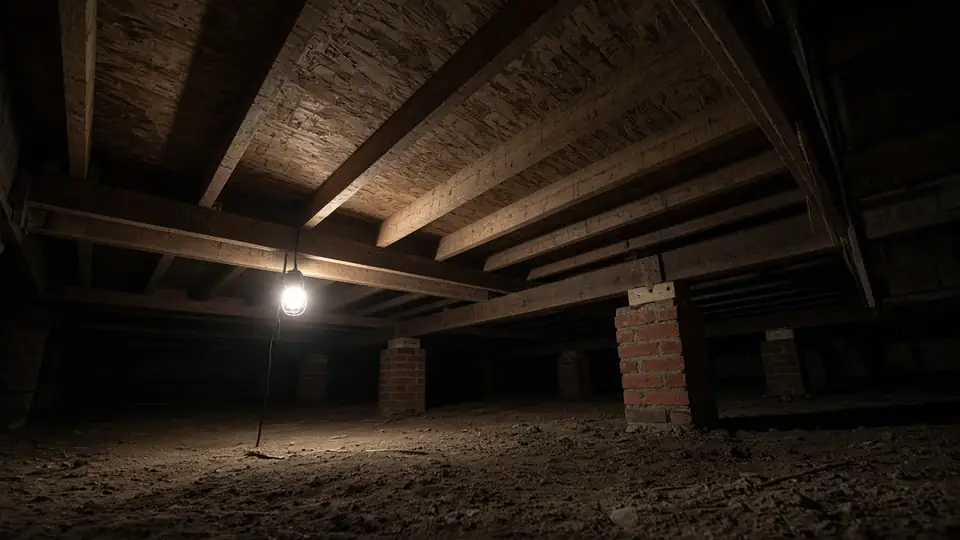
Yes. Wet joists and a wet subfloor need drying too. Ask how the company will dry the space under the floor and what it will do about the vents.
Can I keep the carpet?
Sometimes, if it was wet only briefly. The EPA warns that carpet which stays damp may not be saved. Ask for the call to be made in writing, with moisture readings.
Does the drying company also write the assessment?
It should not write the removal findings. Keep the assessor separate, and book the assessment once the house reads dry.
What changes with where the water arrives
Water that came in
Water that came in from outside may carry dirt, so ask the drying company which materials it will dry in place and which it will tell you to discard. Speed matters, because the clock is short.
A leak
A leak inside a wall wets the board and insulation first. Ask for the leak to be repaired, and ask how the wall cavity will be dried without cutting more than needed.
The ground under it
A wet subfloor over a vented crawl space may keep taking on water from the vents. Ask how the space under the floor will be dried, and whether the vents stay open.
Your own room air
If a room never dries, the problem may be its own air, not a leak. Ask for a humidity reading before anyone sets up fans, and consider the assessment first.
Basis: Ten Things You Should Know About Mold, US EPA; Mold, Moisture and Your Home, US EPA
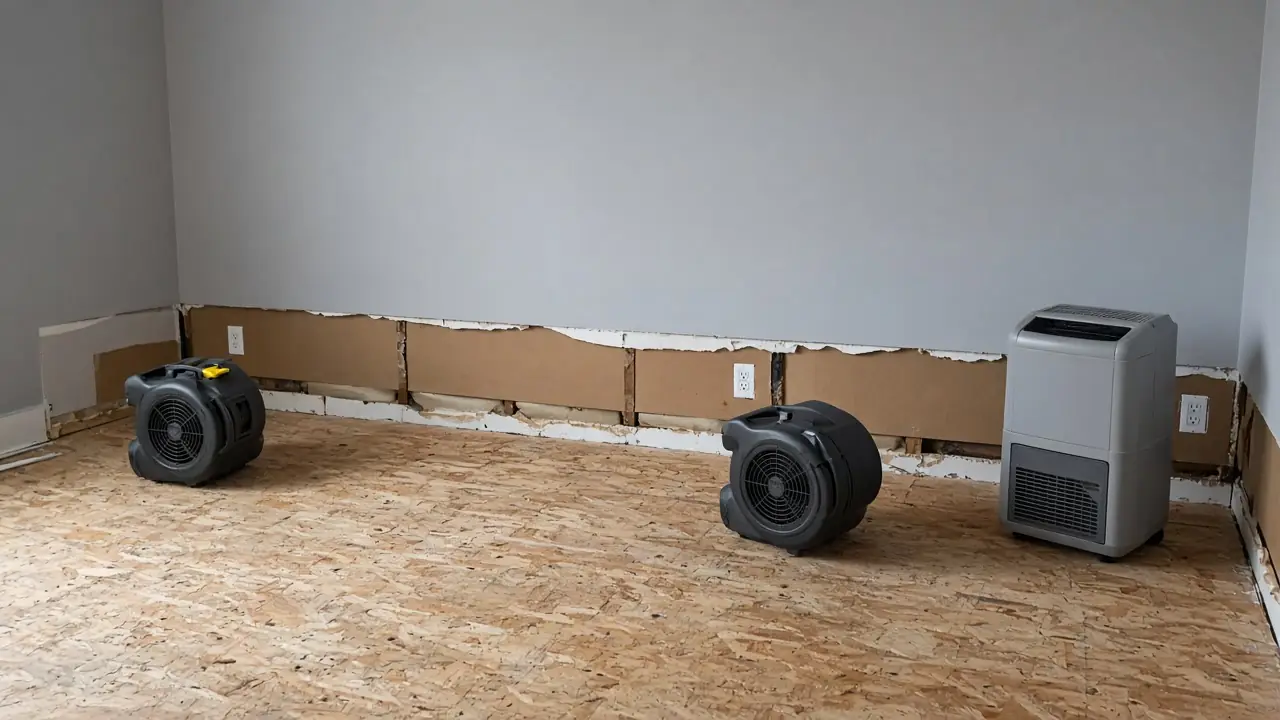
The work, drawn on the wall
Air mover
Moves air across the wet floor or board.
Dehumidifier
Pulls the water out of the closed room.
Lower wall cut
A cut opens a wet cavity so it can dry.
What your house changes
Raised on piers
Water can reach the subfloor from above or the crawl space below. Ask how both sides of the floor will be dried, and what the vents will do.
Slab on the ground
Water sits on the slab or in the lower wall, with nowhere to drain. Ask how the lower board will be cut or left, and how the slab will be read.
A shared wall or unit
Water in one unit can run into the next. Tell the owner at once, and ask that both sides of the shared wall are read and dried.
Basis: Unvented Insulated Crawlspaces, Building America Solution Center; Class I Vapor Retarders Not Installed in Above-Grade Walls in Warm-Humid Climate
What the job covers
Moisture mapping
Ask for readings room by room, so you know what is wet and what is dry.
Fans and dehumidifiers
Ask where each machine goes, and how many days it runs.
Drying in place or opening up
Ask which materials dry where they are, and which are cut open.
A daily log
Ask for readings on each visit, so you can see the numbers fall.
A written sign-off
Ask for a note of when each area reached dry and what was removed.
How it runs, first call to last paper
Stop the water
Shut the supply, set a bucket, and close the doors and windows. If water reached outlets, cords or the electrical panel, keep power off to that area and call the utility or a licensed electrician before anyone runs fans there.
Book the drying
Tell us what got wet, and when, and we help you book a company.
Machines run with the house closed
Fans and a dehumidifier run while the AC holds the room cool.
The readings fall
You see daily readings until each area reaches a dry reading.
Papers to hold
The moisture map
Readings on day one, so you can see how wet it was.
The drying log
Daily readings that show the numbers falling to dry.
A list of what was removed
Every board, floor or carpet taken out, with photos.
Why the windows stay shut in summer
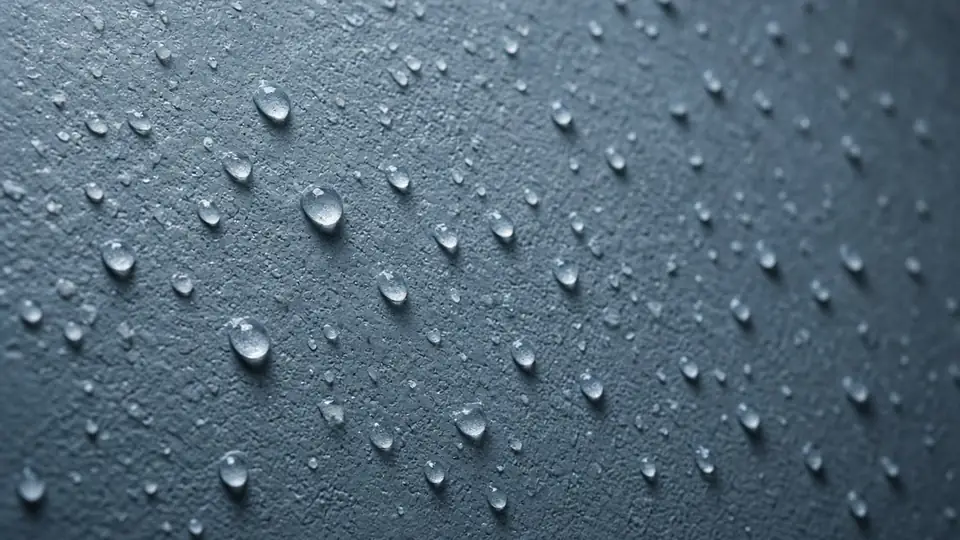
The airport's mean dew point is 75.2 F in July. Air at that dew point leaves water on any surface colder than about 75 F, so open windows add water faster than a wet floor can give it up. The EPA's 24 to 48 hour clock is hard to meet that way.
Ask the drying company how it will keep the house closed while the machines run. Then keep your AC set where the company tells you.
Basis: NOAA NCEI, 2023 Local Climatological Data Annual Summary with Comparative Data; Ten Things You Should Know About Mold, US EPA
When to book drying before the assessment
If water came in this week and it was clean, drying comes first. You can book the assessment once the house is stable and you can show what got wet. If the house is dry but a stain keeps returning, the assessment comes first.
Whoever dries your house, keep the assessor separate. Ask any company that offers both who will write the findings.
What to save, and what to let go
Hard surfaces can often dry in place. Carpet pad, insulation and ceiling tile soak up water, and the EPA warns they may be beyond saving if they stay wet. Ask the company to name each one it plans to discard and why.
Take photos before anything leaves the house. They help you and your insurer see what was lost, and they help you compare drying quotes.
When a room will not stay dry
If the readings climb back after drying, the water is arriving again. The cause may be a hidden leak, humid air under a raised floor or a cold wall face. Ask the company to stop and say what it sees.
That is the moment to book the assessment. Tell the assessor what the drying readings showed and when they came back up.
What moves the price
- The number of wet rooms and the area of wet floor set the machine count.
- Days of drying matter more than the day of the visit.
- Water from outside may add cleaning and discarding to the job.
- A wet crawl space or wall cavity takes extra equipment and time.
- Heavy summer humidity can lengthen the drying time.
- The company sets its price; your $100 comes out of our fee once the job is booked.
Places this job is booked
Find the source first.