
Mold Assessment in Terrytown for Slab Houses of Three Decades
A written survey that finds where the water is coming from in a Terrytown slab house and gives owner and tenant the same set of facts.
Mold Assessment quote in Terrytown
Tell us what you can see or smell, roughly where in the house it is, and whether the house is raised or on a slab. Those three things narrow it more than the size of the patch does, because they point at how the water is arriving rather than where it ended up.
Would you rather talk it through? Call (315) 640-3590.
$100 off your first job
Credited by us on your first booked job.
- One credit per customer per property, on your first booked job.
- Valid through December 31, 2026.
Mention this offer when you book. Full terms.
Terrytown's three building decades and its flood map
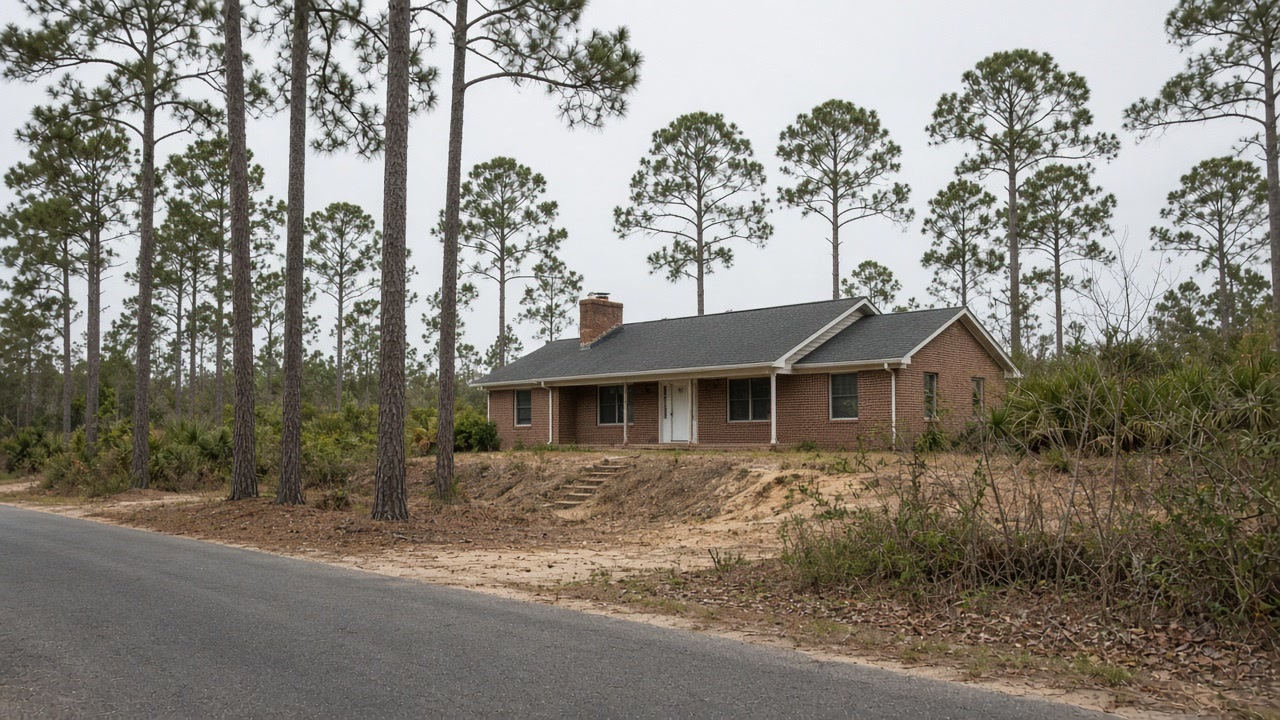
Terrytown has 9,723 housing units with a median year built of 1976, built out almost entirely in three decades: 2,478 units from the 1960s, 2,744 from the 1970s and 2,173 from the 1980s. Only 141 units, 1.5 percent, predate 1940 and 50.8 percent of occupied homes are rented.
Source: United States Census Bureau, American Community Survey 2020-2024 five year estimates, accessed 2026-09-22
Terrytown records 304 National Flood Insurance Program multiple loss properties, of which 138 have four or more paid losses. Only 11 of the 304, under 4 percent, sit outside the mapped high risk flood zone, the lowest share of any place in this service area.
Source: Federal Emergency Management Agency, OpenFEMA dataset NFIP Multiple Loss Properties, data as of August 2, 2026, accessed 2026-09-22
This metro carries both foundation types on the same streets. Raised pier and beam construction with an open or vented space underneath dominates the pre-war stock and much of what has been rebuilt since, because federal rule 44 CFR 60.3(c)(2) requires the lowest floor to sit at or above the base flood level. Slab on grade dominates the post-war suburbs, where the American Community Survey puts the median year built at 1972 in Metairie, 1976 in Terrytown and 1978 in Kenner and Chalmette.
Source: Office of the Federal Register, Electronic Code of Federal Regulations, Title 44 Section 60.3, accessed 2026-09-22
Renter share of occupied homes across this service area ranges from 20.2 percent in Belle Chasse and 22.5 percent in Laplace to 48.8 percent in New Orleans, 50.8 percent in Terrytown and 51.2 percent in Gretna.
Source: United States Census Bureau, American Community Survey 2020-2024 five year estimates, accessed 2026-09-22
Reading a Terrytown slab house in the right order
Terrytown was built fast and built alike: 2,478 homes in the 1960s, 2,744 in the 1970s and 2,173 in the 1980s, on the slab construction that dominates this metro's post-war suburbs. That makes the likely failure points predictable, the bottom plate, the plumbing under the floor and the cooled exterior wall, and a survey can check them in a set order rather than guessing. Half of Terrytown's occupied homes are rented, 50.8 percent, so the finding often has two readers. Dated readings and photographs give owner and tenant one account to work from.

Zone, decade and tenancy before a Terrytown survey
Look up whether the address is in the mapped high risk zone before booking, because in Terrytown the answer is unusually informative. Only 11 of the town's 304 repeat-loss properties sit outside it. If yours is outside and the wall is damp, flooding is an unlikely explanation and the survey should concentrate on the building itself: plumbing, condensation and the joint at the slab edge. If yours is inside, the flood history is part of what the report records. Either way, agree access and copies between owner and tenant first.
In the mapped zone or out
Out of the zone in Terrytown points hard at the building. In it, the report should also record the flood history.
Which decade the house is from
The build year tells the surveyor which assembly to expect behind the drywall, and so where to read first.
Who gets the report
With half the homes rented, settle who commissions it and who receives a copy before anyone opens a wall.
Owner, tenant, or both reading the report?
Tell us who needs the finding. In Terrytown it is often two people, and the report is written for both.
Terrytown removal and drying after the survey
Terrytown survey questions from owners and renters
My landlord and I disagree about where the damp is coming from. Can a survey settle it?
It can put readings and photographs behind one answer, which is usually what settles it. The survey measures the wall's surface temperature against the dew point, reads the bottom plate and floor edge, and opens small inspection squares where the meter points. Neither side has to take anyone's word; the report shows its working.
Why would a Terrytown house outside the flood zone have wet walls?
Because in Terrytown flooding off the map is rare: 11 of 304 repeat-loss properties, under 4 percent. That leaves the building: a line under the slab, a failed joint, or summer condensation on a cooled exterior wall. All three are findable, and each has a specific repair.
Send the Terrytown room and the build year
Roughly when the house was built and where the damp shows. A person reads it and says whether a survey is worth booking.